

Confidence Corner

Chemical Peels 101: Everything You Need to Know Before Your First Peel
Published: February 2026
Reading Time: 8 minutes
The words “chemical peel” can sound a little intimidating.
Images of red, raw skin and days of hiding from the world might come to mind. But here’s the truth: modern medical-grade chemical peels are one of the most effective—and misunderstood—chemical treatments for achieving fresh, glowing, youthful skin.
Whether you’re dealing with dullness, acne, sun damage, fine lines, or you just want a reset after a long winter, a chemical peel might be exactly what your skin needs.
In this complete guide, we’ll cover everything you need to know before your first peel: what they are, what they treat, what to expect, and how to know if one is right for you.
What Exactly Is a Chemical Peel?
A chemical peel is a skin resurfacing treatment that uses a chemical solution to remove the outermost layers of skin. As those damaged layers peel away, fresh, new skin is revealed underneath.
Think of it like this: your skin naturally sheds dead cells, but sometimes that process slows down or gets congested. A chemical peel accelerates and enhances this natural process, helping your skin turn over faster and more efficiently.
The result? Brighter, smoother, more even-toned skin that looks refreshed and rejuvenated.
Medical-Grade Chemical Peel vs. Spa Peels
Not all peels are created equal. Here’s the difference:
Spa or At-Home Peels
- Use lower concentrations of acids
- Provide mild exfoliation with minimal results
- Good for maintenance
- Won’t address significant concerns
Medical-Grade Chemical Peels
- Use higher concentrations that penetrate deeper
- Performed by trained professionals
- Deliver more dramatic, visible results
- Can address stubborn issues like scarring, deep discoloration, and significant texture
At DripNeedle Med Spa, we use medical-grade peels that go beyond surface-level exfoliation to deliver real, noticeable improvement.
What Can Chemical Peels Treat?
Chemical peels are incredibly versatile. They can address:
Dull Skin
If your skin looks tired, flat, or just… blah, a peel can reveal the brighter, more radiant skin hiding underneath.
Uneven Skin Tone and Hyperpigmentation
Sun spots, melasma, post-inflammatory hyperpigmentation (dark spots from acne)—peels help fade discoloration and even out your complexion.
Fine Lines and Wrinkles
By stimulating cell turnover and collagen production, peels can soften fine lines and improve overall skin texture.
Acne and Acne Scars
Certain peels are excellent for clearing active acne by unclogging pores and reducing bacteria. They can also help fade acne scarring over time.
Rough Texture
Bumpy, uneven skin texture becomes smoother as dead cells are removed and new cells take their place.
Sun Damage
Years of sun exposure leave their mark. Peels help reverse some of that damage and reveal healthier skin.
Types of Chemical Peels
Chemical peels are categorized by depth—how deep they penetrate into the skin.
Light (Superficial) Peels
Light peels penetrate only the outermost layer of skin (epidermis). They typically use mild acids like alpha-hydroxy acids (AHAs).
Good for: general brightening, mild texture issues, maintenance
Downtime: minimal (usually light flaking)
Medium Peels
Medium peels penetrate the epidermis and upper dermis. They typically use stronger acids like trichloroacetic acid (TCA).
Good for: moderate sun damage, pigmentation, fine lines, acne scars
Downtime: 5–7 days of visible peeling
Deep Peels
Deep peels penetrate the mid-to-lower dermis. They offer the most dramatic results but require the most recovery time.
Good for: deep wrinkles, significant sun damage, severe scarring
Downtime: longest recovery (often performed only once)
At DripNeedle Med Spa, we’ll recommend the right depth based on your skin concerns, goals, and lifestyle. Most clients see excellent results with light to medium peels.
What to Expect Before, During, and After Your Chemical Peel
Before Your Chemical Peel
Preparation helps ensure the best results:
- Avoid retinoids, exfoliating acids, and harsh products for 3–5 days
- No waxing or laser treatments in the treatment area
- Discontinue photosensitizing medications (if possible and approved by your doctor)
- Come with clean skin (no makeup)
- Tell us about cold sore history (we may prescribe preventive medication)
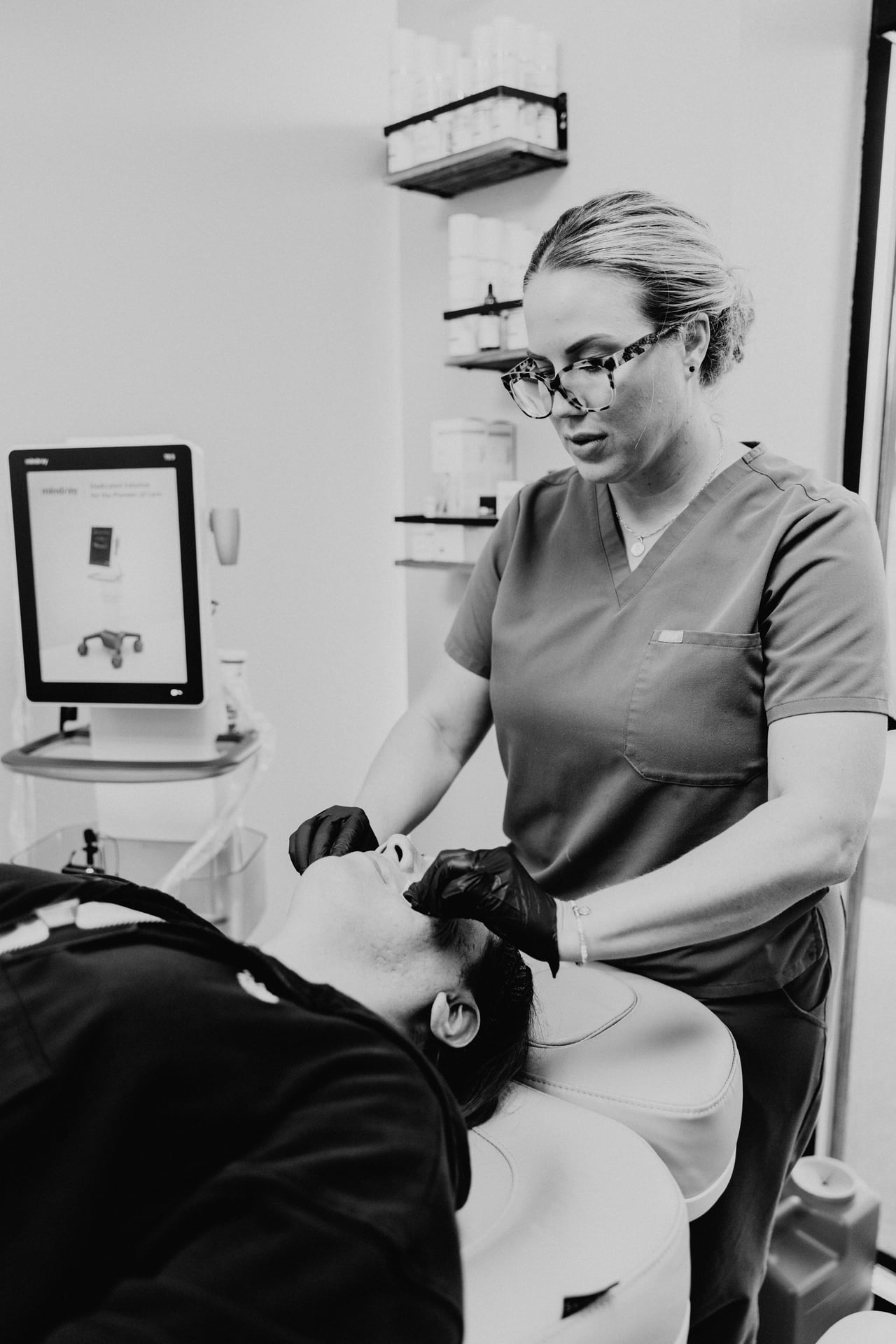
During Your Chemical Peel
Here’s what the appointment looks like:
- Skin is thoroughly cleansed
- Peel solution is applied
- You may feel tingling, warmth, or mild stinging (normal)
- Solution is neutralized or removed after the correct time
- Soothing products are applied
Total time: about 30 minutes
After Your Peel — The Peeling Process
Here’s what to expect in the days following treatment:
Day 1–2
Skin may feel tight and look slightly red (like a mild sunburn). Some peels cause immediate darkening of pigmented areas—this is normal and means it’s working.
Day 3–4
Peeling begins, often around the mouth and chin first. Flaking may look light or sheet-like depending on peel depth.
Day 5–7
Peeling continues then gradually subsides. New skin is revealed underneath.
Day 7–14
Fresh skin settles in. It may appear slightly pink but will look noticeably brighter and smoother.
Important: Do not pick or peel flaking skin. Picking can cause scarring and hyperpigmentation.
Chemical Peel Aftercare
Proper aftercare is crucial for optimal results:
- Use gentle, fragrance-free moisturizer
- Apply SPF 30+ daily (new skin is sensitive)
- Avoid direct sun exposure
- Don’t pick, scratch, or exfoliate peeling skin
- Skip retinoids, acids, and actives until fully healed
- Avoid sweating/intense exercise for a few days
- No makeup until peeling is complete (usually 5–7 days)
- Stay hydrated and nourish your skin from the inside out
Who Should Avoid Chemical Peels?
Chemical peels aren’t right for everyone. You may need to postpone or avoid peels if you:
- Are pregnant or breastfeeding
- Have active cold sores or skin infections
- Have used Accutane in the past 6–12 months
- Have very dark skin (higher risk of pigmentation issues with certain peels)
- Have a history of keloid scarring
- Have open wounds or sunburn
- Can’t avoid sun exposure after treatment
We’ll review your full history during your consultation to confirm safety and suitability.
Chemical Peel vs. Microneedling — Which Is Right for You?
Both treatments improve skin texture and appearance, but they work differently.
Comparison Table
| Category | Chemical Peel | Microneedling |
|---|---|---|
| How it works | Dissolves dead skin cells | Creates micro-injuries to trigger healing |
| Best for | Pigmentation, dullness, acne | Scars, texture, fine lines |
| Downtime | 5–7 days peeling | 2–3 days redness |
| Price | $250 | $300–$600 |
| Visible peeling? | Yes | No |
Many clients benefit from both treatments at different times. During your consultation, we can create a plan that incorporates both for optimal results.
Why Spring Is the Perfect Time for a Chemical Peel
Timing matters with peels. Spring is ideal because:
- Sun intensity is lower than summer
- Winter dullness is at its peak
- Results will be fully visible by summer
- Easier to schedule around vacations
- Post-winter skin is ready for renewal
If you’ve been considering a peel, spring is prime time—waiting until summer often means waiting until fall.
Ready to Reveal Your Best Skin?
A chemical peel might be the reset your skin has been craving. Fresh, glowing, even-toned skin is possible—and it starts with a conversation.
At DripNeedle Med Spa in Wilmington, Delaware, we offer complimentary consultations where we’ll assess your skin, discuss your goals, and recommend the perfect peel for your needs.
Here’s to shedding the old and glowing into spring
Frequently Asked Questions About Chemical Peels
Do chemical peels hurt?
Most clients experience tingling, warmth, or mild stinging during the peel, but it’s very tolerable and only lasts a few minutes while the solution is active. If you have sensitive skin, let us know—we can adjust accordingly.
How long is the downtime for a chemical peel?
Downtime depends on peel depth. Light peels may cause minor flaking for 1–3 days. Medium peels typically involve 5–7 days of visible peeling. During that time, avoid big social events and skip makeup until peeling is complete.
How often can I get a chemical peel?
Light peels can be done every 4–6 weeks. Medium peels are typically spaced 2–3 months apart. Your provider will recommend a schedule based on your goals and peel type.
Can I wear makeup after a chemical peel?
We recommend avoiding makeup until peeling is complete (usually 5–7 days for medium peels) to allow proper healing and prevent irritation.
Will I see results after one peel?
Yes—most clients notice improved brightness and smoothness after one peel. For deeper pigmentation or texture concerns, a series of peels (often 3–6, spaced 4–6 weeks apart) delivers the best results.
Are chemical peels safe for dark skin?
They can be, but peel selection is essential. Some peels have a higher risk of post-inflammatory hyperpigmentation in darker skin tones. During your consultation, we’ll assess your skin type and recommend the safest, most effective option.

Be the first to comment